
Using Machine Learning to Predict Chaotic System
This is the project I am currently doing. We are comparing the performance of different machine learning algorithms on predicting chaotic systems, with a specific focus on Lorenz 63 model. The models we are comparing include Physics Informed Neural Network(PINN), Multistep Neural Network, Resnet-based Multistep Neural Network and Reservoir Computing. Moreover, we are considering adapting PINN to make it work on long-time inference problems. It turns out that an adapted LSTM-PINN could work better in general. We also consider make PINN and Reservoir Computing work together to create some hybrid model. I am working on the long-time integration effect of a forward PINN, studying its parallelized counterpart. See more on my brief slides.
PDE Solving in Mathematical Biology
In this project, we designed a modified finite difference scheme to solve a stochastic, nonlinear diffusion equation modeling factors that influence the lateral organization of the plasma membrane. The algorithm was implemented in C++ with high computation efficiency. We also studied how different parameters could lead to different scenarios.
Asymptotic Analysis of ODEs
I systematically studied asymptotic analysis and Painleve Equations under Dr. Wang Xiangsheng’s guidance. Gave series solution to a group of third order nonlinear ODEs, and tried to give a closed form solution based on well-known special functions. Studied Prof. Roderick Wong’s work on asymptotic expansion of variable coefficient second order linear difference equations.
Parallel version of a GIS algorithm(REU)
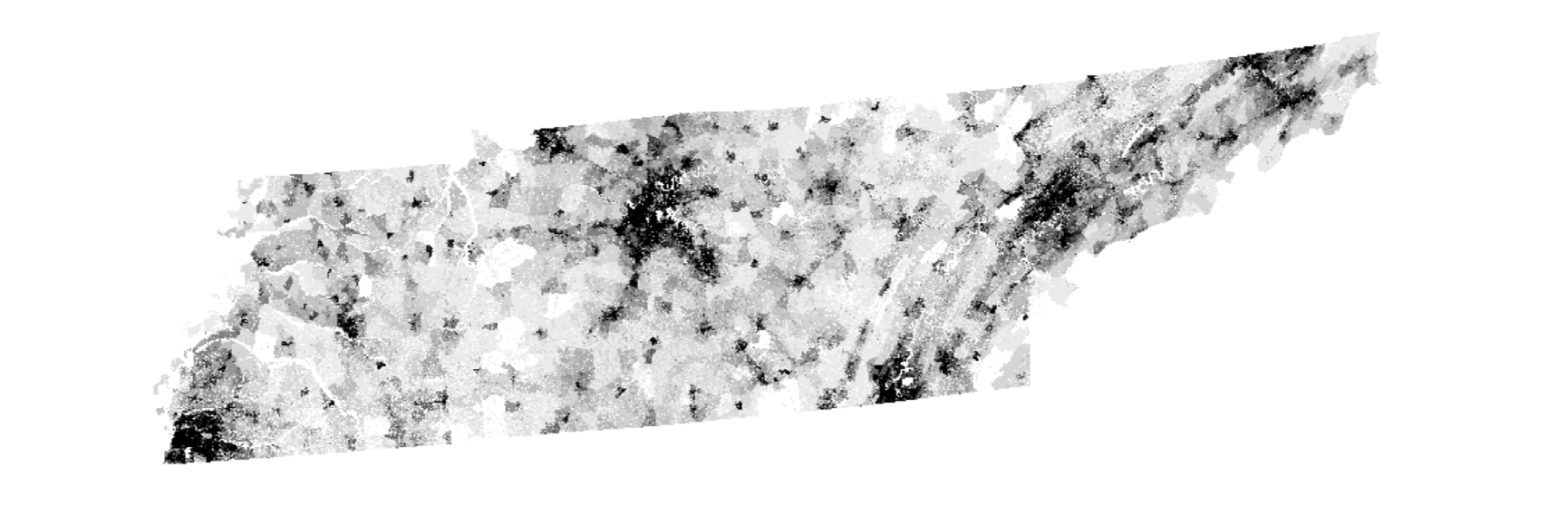
I spent a summer in the Joint Institute for Computational Science at UTK and ORNL in year 2016. I proposed a parallel version of the dasymetric mapping algorithm in GIS and implemented it in MPI. The new method effectively improved running efficiency. Check this website for my final report.




近期评论