
发布策略
Ramped deployment
Version B is slowly rolled out and replacing version A. Also known as rolling-update or incremental.
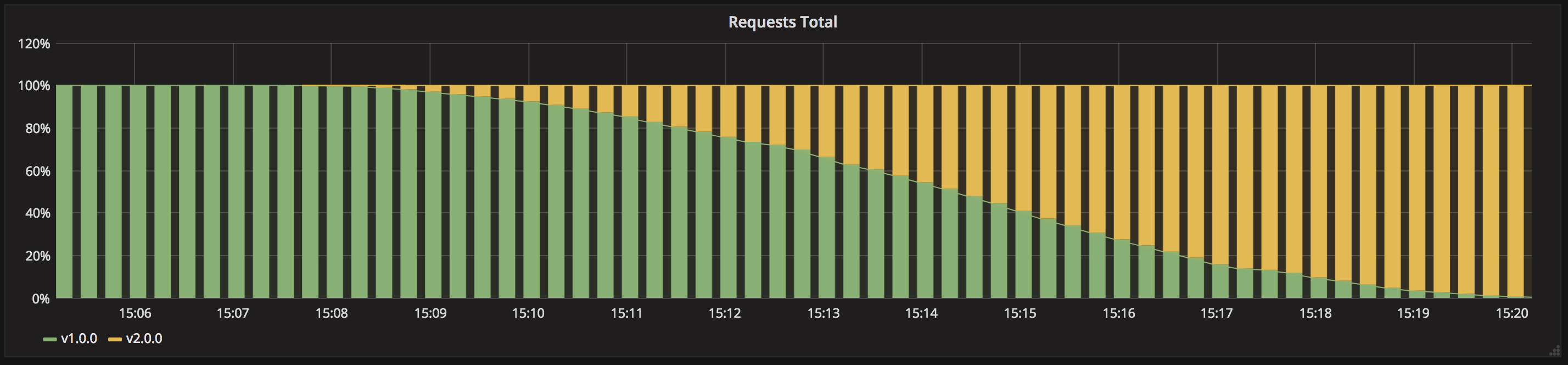
The ramped deployment strategy consists of slowly rolling out a version of an application by replacing instances one after the other until all the instances are rolled out. It usually follows the following process: with a pool of version A behind a load balancer, one instance of version B is deployed. When the service is ready to accept traffic, the instance is added to the pool. Then, one instance of version A is removed from the pool and shut down.
Depending on the system taking care of the ramped deployment, you can tweak the following parameters to increase the deployment time:
- Parallelism, max batch size: Number of concurrent instances to roll out.
- Max surge: How many instances to add in addition of the current amount.
- Max unavailable: Number of unavailable instances during the rolling update procedure.
Blue/green deployment
Version B is released alongside version A, then the traffic is switched to version B. Also known as red/black deployment.
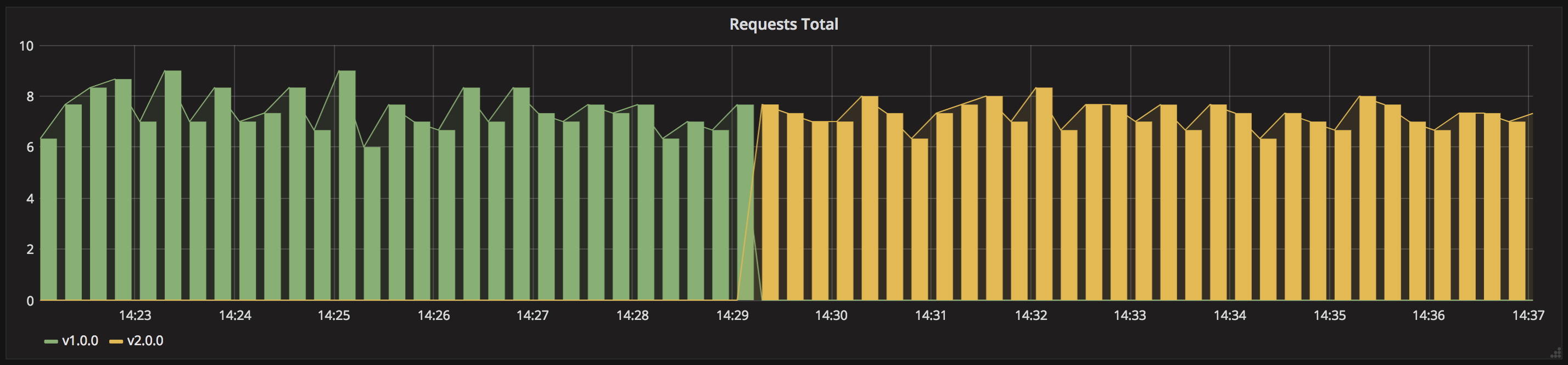
The blue/green deployment strategy differs from a ramped deployment, version B (green) is deployed alongside version A (blue) with exactly the same amount of instances. After testing that the new version meets all the requirements the traffic is switched from version A to version B at the load balancer level.
Canary deployment
Version B is released to a subset of users, then proceed to a full rollout.
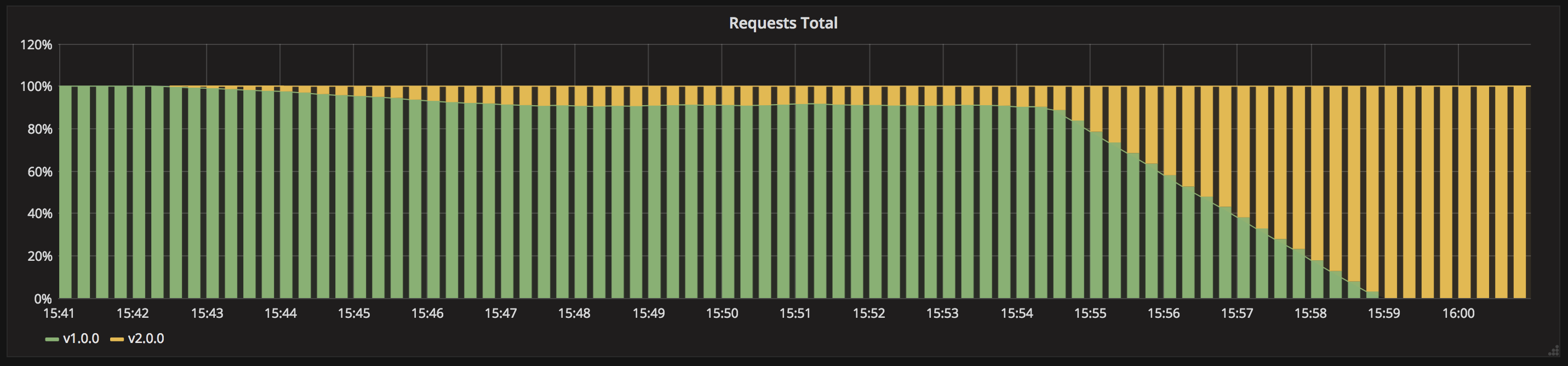
A canary deployment consists of gradually shifting production traffic from version A to version B. Usually the traffic is split based on weight. For example, 90 percent of the requests go to version A, 10 percent go to version B.
This technique is mostly used when the tests are lacking or not reliable or if there is little confidence about the stability of the new release on the platform.
A/B testing using Istio
Version B is released to a subset of users under specific condition.
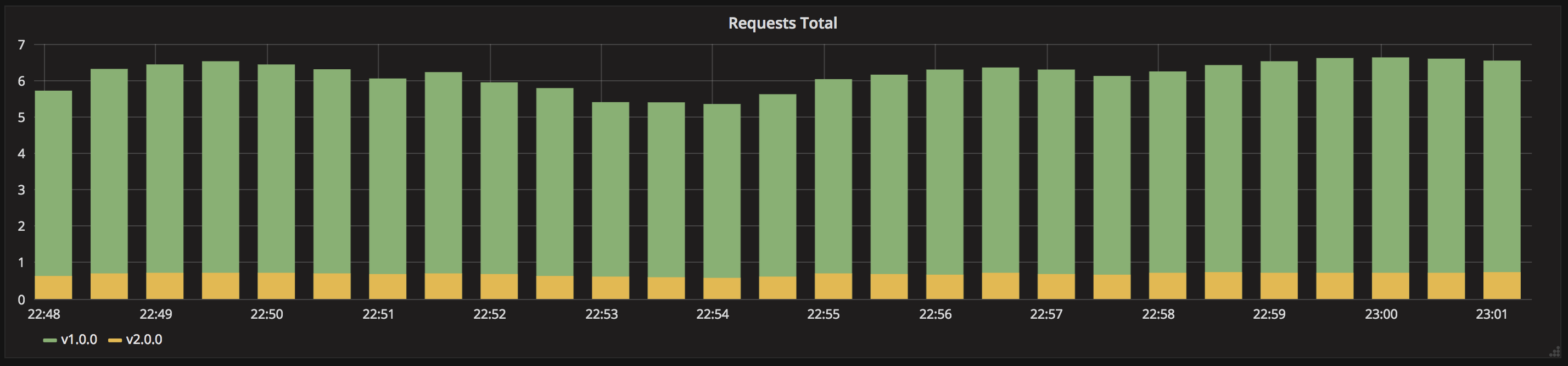
A/B testing deployments consists of routing a subset of users to a new functionality under specific conditions. It is usually a technique for making business decisions based on statistics rather than a deployment strategy. However, it is related and can be implemented by adding extra functionality to a canary deployment so we will briefly discuss it here.
This technique is widely used to test conversion of a given feature and only roll-out the version that converts the most.
Shadow deployment
Version B receives real-world traffic alongside version A and doesn’t impact the response.
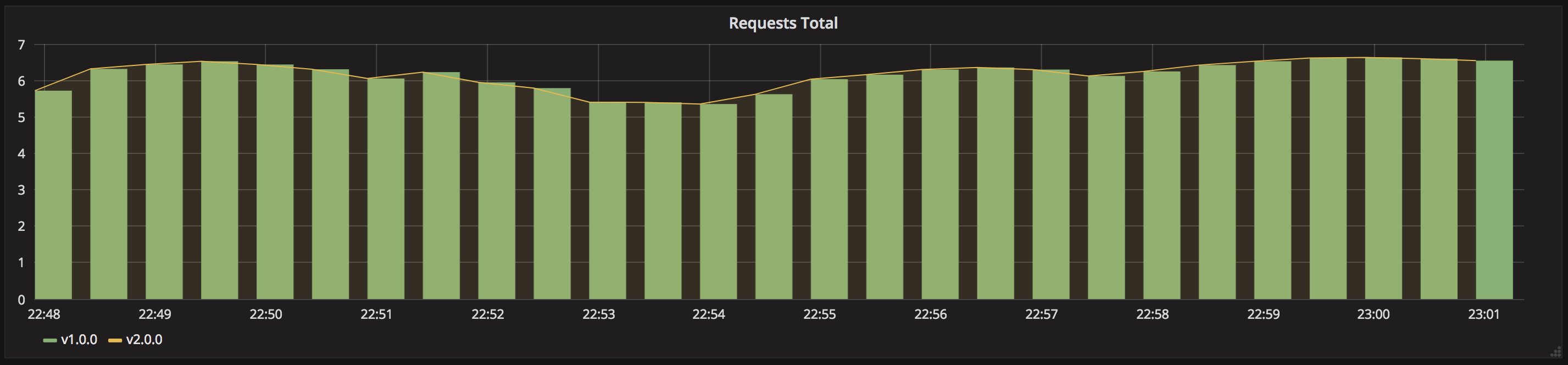
A shadow deployment consists of releasing version B alongside version A, fork version A’s incoming requests and send them to version B as well without impacting production traffic. This is particularly useful to test production load on a new feature. A rollout of the application is triggered when stability and performance meet the requirements.
This technique is fairly complex to setup and needs special requirements, especially with egress traffic. For example, given a shopping cart platform, if you want to shadow test the payment service you can end-up having customers paying twice for their order. In this case, you can solve it by creating a mocking service that replicates the response from the provider.




近期评论